
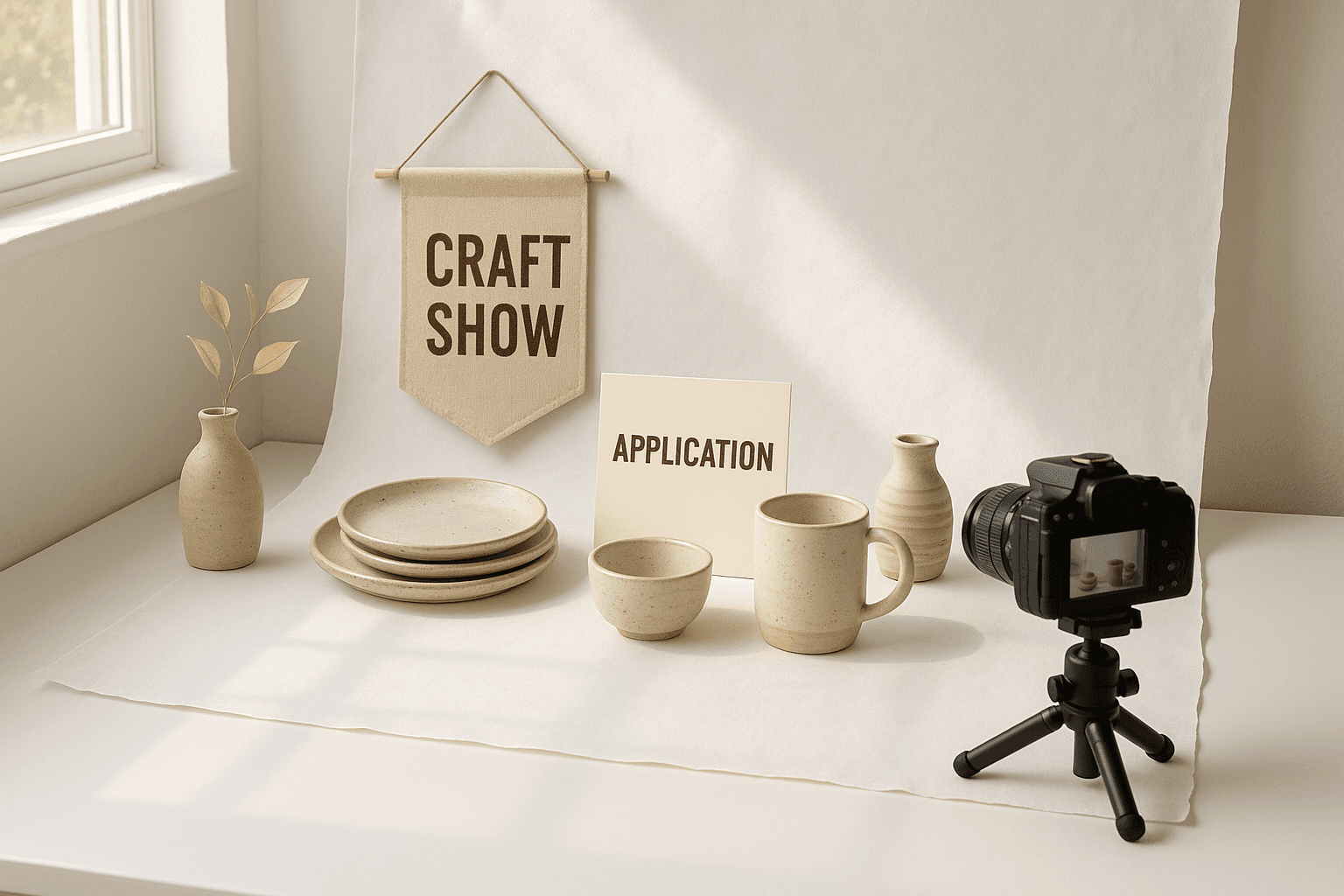
You spent months perfecting your product. Your booth setup is dialed in. You hit "submit" on that dream craft show application and wait. Then the rejection email lands.
You are not alone. Popular juried craft shows receive five to ten times more applications than available spots. That means for every vendor who gets in, four to nine others get turned away — many of them talented makers with great products.
The difference between accepted and rejected usually is not about talent. It is about understanding what jurors actually look for, presenting your work in the best possible light, and playing the application game strategically. This guide breaks down exactly how to do that.
What Makes a Craft Show "Juried"
A juried craft show uses a selection committee to review every application and choose which vendors get booth space. Unlike open-enrollment shows where anyone can buy a table, juried events curate their vendor mix for quality, variety, and audience fit.
This is a good thing for you. Juried shows tend to attract better foot traffic, higher-spending customers, and stronger brand exposure. The bar to entry exists because the organizers are protecting the experience for both shoppers and vendors.
Show organizer Nicole Stevenson puts it plainly: "It is a judgment on whether what you make fits that particular show." Read that again. It is not a judgment on you or your talent. It is a fit assessment. That reframe changes everything about how you approach applications.
The Anatomy of a Craft Show Application
Before diving into strategy, understand what most juried shows ask for:
- 3 to 5 product photos showing your range and quality
- 1 to 2 booth setup photos demonstrating your display and presentation
- Product description explaining what you make and your process
- Price range for your products
- Website or social media links as proof of your brand and following
Some shows add questions about your experience, why you want to participate, or what makes your work unique. Every field matters. Jurors review hundreds of applications, often spending under two minutes on each one. You need to make those two minutes count.
Photography: The Number One Rejection Reason
This is not an exaggeration. Photography is the single biggest reason applications get rejected. You could have the most stunning handmade ceramics on the planet, but if your photos look like they were shot on a phone in a dim kitchen, you are out.
Product Photos That Get You In
Lighting is everything. Natural light near a large window or an inexpensive lightbox setup will transform your images. Avoid overhead fluorescent lighting, mixed light sources, and harsh direct sunlight that creates sharp shadows.
Use a clean, consistent background. White or light gray works for most products. Some makers use styled lifestyle shots, which can work beautifully, but make sure the product is the clear focal point.
Show your range. If you make jewelry, do not submit five photos of the same earring style. Show different pieces, different materials, different price points. Jurors want to see that you can fill an entire booth with variety.
Get close. Detail shots that show craftsmanship, texture, and finish quality tell jurors you take your work seriously. A macro shot of hand-stitched leather or a glaze detail on pottery speaks volumes.
Booth Photos That Seal the Deal
Your booth photos show jurors two things: that you know how to present your work at a show, and that your display will elevate the overall event aesthetic.
If you have done shows before, use your best booth setup photos from real events. If you have not, set up a mock booth in your garage or living room. Use your actual display fixtures, signage, and product layout.
Include your banner or signage. Show products at multiple heights. Demonstrate that shoppers can easily browse and engage with your work.
Category Saturation: The Silent Killer
Here is a truth most application guides skip: your rejection might have nothing to do with your quality. It might be pure math.
Certain categories are massively oversaturated. Jewelry, stickers and prints, and candle makers face the steepest competition at almost every juried show. If a show has 80 vendor spots and receives 40 jewelry applications, only a handful are getting in no matter how good they all are.
How to Beat Category Saturation
Emphasize what makes you different. If you make jewelry, do not just say "handmade jewelry." Describe your specific niche — hammered brass geometric earrings, gemstone wire wrapping with ethically sourced stones, or miniature botanical resin pendants.
Highlight your unique process. Jurors remember applications that teach them something. If you use a traditional Japanese metalworking technique or source materials from a single family-owned mine, say so.
Consider underserved categories. Woodworking, textiles, ceramics, metalwork, and mixed media often have fewer applicants competing for the same number of spots.
Timing and Strategy: The Early Bird Advantage
Most juried shows use one of two selection models: rolling acceptance or deadline-based review.
Rolling Acceptance
With rolling acceptance, applications are reviewed as they come in. Early applicants have a structural advantage because spots fill up as the committee accepts vendors. Apply the day applications open. Set calendar reminders. Follow shows on social media and sign up for their newsletters so you know the moment applications go live.
Deadline-Based Review
Some shows collect all applications by a deadline, then review them together. Even here, applying early shows professionalism and enthusiasm.
Build Your Show Calendar
Create a spreadsheet tracking your target shows with these columns:
- Show name and dates
- Application open date
- Application deadline
- Fee and booth cost
- Category you are applying under
- Status (applied, accepted, waitlisted, rejected)
- Notes from past years
Research Before You Apply
Submitting blind applications to every juried show you find is a waste of time and entry fees. Do your homework first.
Walk the Show
If possible, attend the show as a customer before you apply as a vendor. Pay attention to the vendor mix, the types of products that dominate, the price points shoppers respond to, and the overall vibe.
Study Past Vendor Rosters
Most shows post their vendor lists online or tag vendors on Instagram. Go through the past two or three years of vendor rosters. Look at what categories are represented and whether there is an opening for what you make.
Check the show's own hashtag on Instagram. You will find photos from past events, see what booths looked like, and get a feel for the audience.
Read the Prospectus Carefully
Every juried show publishes vendor guidelines or a prospectus. Read every word. Some shows explicitly state what categories they are looking to add. Others list categories that are currently full. This information is gold.
Writing an Application That Stands Out
Lead with what you make. "I create hand-forged copper home goods using traditional blacksmithing techniques" is infinitely stronger than "I am an artist who makes various things for the home."
Include your price range honestly. Shows want a mix of price points. If your products range from $15 to $200, say so.
Mention relevant experience. List a few notable shows you have done, especially if they are respected juried events. If you are newer, mention markets, pop-ups, or online sales numbers that demonstrate traction.
What to Do After a Rejection
Getting a rejection stings, but how you handle it can set you up for success next time.
Follow Up and Get Feedback
Many show organizers will share feedback if you ask politely. Send a brief, gracious email thanking them for their time and asking if they can share any specific reasons or suggestions for improving your application.
Do Not Burn Bridges
The craft show world is small. The organizer who rejected you this year might accept you next year, recommend you to another show, or remember your professionalism when a spot opens up last minute.
Ask About Waitlists
Many shows maintain waitlists. Vendors drop out for all kinds of reasons. If you are on the waitlist, you might get a call two weeks before the show. Be ready to say yes.
Strengthen Your Application for Next Time
Use the gap between rejection and the next application cycle productively. Invest in better photography. Build your social media presence. Do smaller shows to build your resume and collect real booth photos.
Building Your Show-Ready Business
Landing a spot at a juried craft show is just the beginning. Once you are in, you need systems to make the most of every customer interaction — taking orders for products you cannot carry in your booth, capturing leads from interested shoppers, and following up after the event.
Tools like Shipyie are built specifically for convention and craft show vendors to take orders, ship products, and capture leads directly from their booth. Plans start at $29 per month, and you can start a free 14-day trial with no credit card required.
Quick Reference: Application Checklist
- 3 to 5 high-quality product photos with consistent lighting and backgrounds
- 1 to 2 booth setup photos showing a professional, inviting display
- Specific product description highlighting what makes your work unique
- Accurate price range covering your full spectrum
- Updated website or social media links with recent, quality content
- Application submitted as early as possible after opening
- Category chosen strategically to minimize direct competition
- Show researched — you have walked it or studied past vendors online
The vendors who consistently get accepted at top-tier shows did not start there — they built up through smaller events, improved their photography year over year, refined their product line, and learned what each specific show values. Treat every application as practice. Treat every rejection as feedback. The craft show circuit rewards persistence, professionalism, and preparation.