
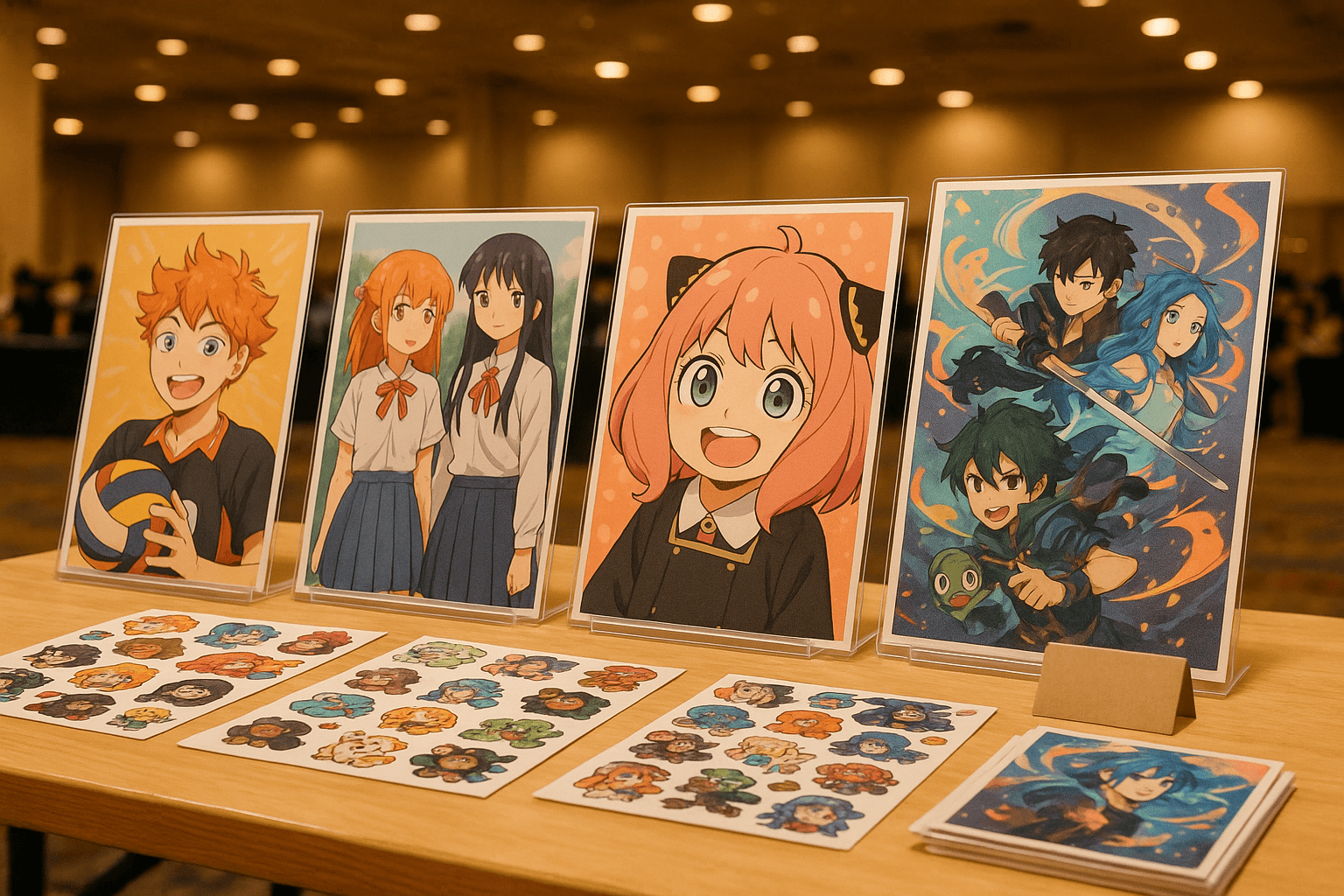
Getting into artist alley is harder than most people think. MomoCon regularly receives over 3,000 applications for roughly 500 spots. Anime Expo is worse. Even mid-size regional cons can see two or three times more applicants than available tables.
This guide covers how juried and lottery systems work, what makes a strong application, and specific strategies for artists who have no convention track record yet.
How Artist Alley Selection Actually Works
Juried vs. lottery systems
| Factor | Juried Selection | Lottery System |
|---|---|---|
| How artists are chosen | Panel reviews each application | Random draw |
| What matters most | Portfolio quality, product range | Meeting basic eligibility |
| Typical acceptance rate | 15-30% at large cons | Varies, luck-based |
| Examples | Anime Expo, Otakon, MomoCon | Some smaller regional cons |
| Reapply advantage | Strong — improvements noticed | Minimal |
What Jurors Evaluate
- Art quality and consistency
- Product variety — more than just prints
- Table presentation
- Fit with the convention
Building a Portfolio That Gets You Accepted
Skip Instagram as Your Portfolio
Instagram is not a portfolio. Use:
- A dedicated portfolio site (Carrd, Squarespace) with your best 10-15 product photos
- A Google Drive folder organized by product type
- A simple Notion page with embedded images
What to Include
- 8-12 of your strongest product photos
- At least 3 different product types
- One or two table setup photos (real or mock)
- A brief artist statement
Table Setup Photos Are Quietly Important
Consider setting up a mock table at home if you have never done a convention. Photograph it from the customer's perspective.
Application Timing
When applications typically open
| Convention Size | Application Window | How Fast They Fill |
|---|---|---|
| Major (Anime Expo, NYCC) | 4-6 months before | Hours to days |
| Large regional (MomoCon) | 3-5 months before | Days to 1-2 weeks |
| Mid-size regional | 2-4 months before | 1-3 weeks |
| Small local | 1-3 months before | Weeks to ongoing |
Apply to eight to twelve conventions per year, knowing you will get into roughly half.
Fan Art Rules
A growing number of conventions require 20-50% original work. Before applying, check:
- Fan art percentage requirements
- Prohibited content categories
- Rules about mass-produced items
Product Diversity
Aim for at least four to five categories:
- Art prints (various sizes)
- Sticker sheets and die-cut stickers
- Enamel pins or acrylic charms
- Apparel (shirts, tote bags)
- Zines or small books
First-Timer Strategies
Start Small
- Local pop-up markets — Low cost, low pressure.
- Small regional cons — 1,000 to 5,000 attendees, lower table costs ($50-$150).
- Online conventions — Portfolio-building experience.
Leverage What You Have
- Online sales experience (Etsy, Shopify)
- Art community involvement (zines, art fight)
- A polished portfolio
When you start selling at conventions, tools like Shipyie can help you manage orders and shipping from your booth. The QR code address collection feature is especially useful — customers scan and enter their own shipping info.
Handling Rejection
- Do not take it personally.
- Request feedback if offered.
- Compare your portfolio to accepted artists.
- Improve one specific thing before reapplying.
Your Application Checklist
- Portfolio link works on desktop and mobile without login
- 8-12 high-quality product images
- At least 3 product categories
- Table setup photo (real or mock)
- Fan art percentage complies with rules
- Application submitted within the first 48 hours
If you are planning your first convention season, Shipyie's 14-day free trial gives you order management, lead capture, and shipping tools built for convention vendors. No credit card required.