
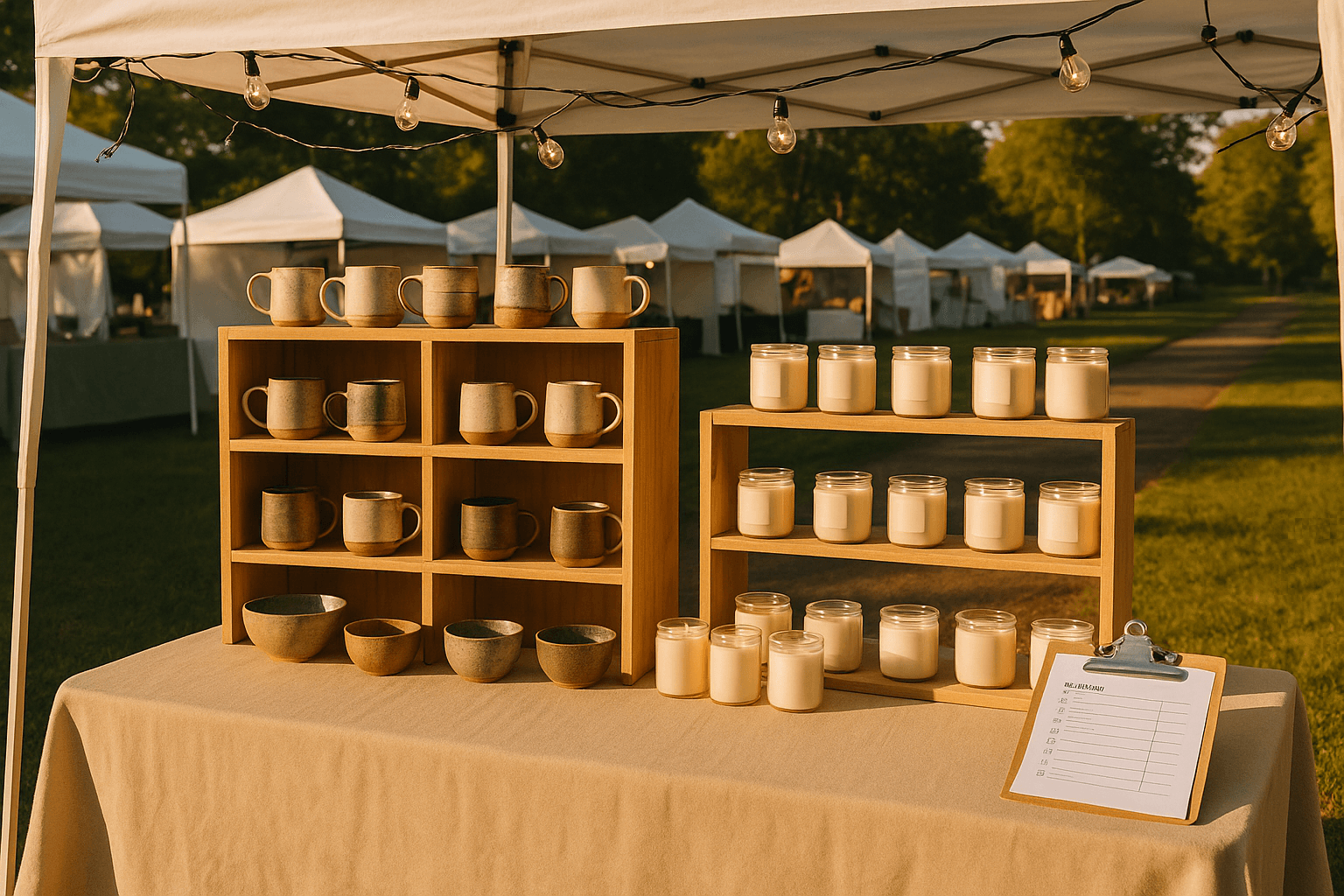
You paid $350 for a booth, drove three hours, and spent a full Saturday smiling at people who bought nothing. By 4 PM you had made $87 and a strong desire to never do this again.
That show was not the problem. Picking it without doing your homework was.
Every experienced vendor has a story like this. The difference between vendors who build a sustainable business and those who burn out after one season is simple: they learned how to evaluate a craft show before writing the check.
This guide gives you a repeatable framework for deciding whether a show is worth your time, your money, and your inventory. Use it every single time you consider an application.
Start With the Organizer, Not the Show
The quality of a craft show is a direct reflection of the person or organization running it. Before you look at booth fees, dates, or location, research who is behind the event.
Here is what to look for:
- Track record. How many years has this show been running? A show in its fifth year or beyond has worked out its logistics. A first-year show is a gamble, and you should price that risk accordingly.
- Online presence. Does the organizer have an active website, social media accounts, and email list? Check their Instagram or Facebook page. Look at post frequency, engagement, and whether they actually promote their vendors or just post flyers.
- Other events. If the organizer runs multiple shows, look at reviews and photos from those events. Consistency across events tells you a lot about their operational standards.
- Responsiveness. Send the organizer a question before you apply. How fast do they respond? How detailed is the answer? If they ghost you before you have paid, imagine what happens after.
Questions You Should Ask Every Show Organizer
Most craft show applications are one-directional. You fill out the form, pay the fee, and hope for the best. Flip that dynamic. Treat every application like a business investment, because that is exactly what it is.
Attendance and Marketing
| Question | Why It Matters | What a Good Answer Looks Like |
|---|---|---|
| What was last year's attendance? | Lets you calculate vendor-to-attendee ratio | A specific number, ideally with source |
| How do you market the show? | Shows whether they invest in driving traffic | Paid social ads, email list, local press |
| What is your marketing budget? | Separates serious organizers from hobbyists | Any concrete number signals intent |
| Do you have an email list? How large? | Email drives more reliable attendance than social | 1,000+ for local, 5,000+ for regional |
Vendor Details
| Question | Why It Matters | What a Good Answer Looks Like |
|---|---|---|
| How many vendors will be there? | Helps calculate competition density | A firm cap, not "as many as we can fit" |
| Do you limit duplicate product categories? | Prevents five candle makers competing for same buyers | Yes, with a stated cap per category |
| What is the vendor-to-attendee ratio? | The single most important metric for sales potential | 1 vendor per 40-75 attendees is solid |
Logistics
- What are the load-in and load-out windows?
- Is there on-site parking for vendors?
- Are tables, chairs, or electricity included, or extra?
- What is the refund and cancellation policy?
- Is there a rain plan for outdoor shows?
Red Flags That Should Make You Walk Away
Not every craft show deserves your application. Here are the warning signs that experienced vendors learn to spot, usually after getting burned.
No Social Media Presence
If a show has no Facebook page, no Instagram, and no website beyond a basic flyer, the organizer is not investing in marketing. That means they are not investing in getting customers to your booth.
Vague Attendance Claims
"We expect thousands of visitors" is not a number. It is wishful thinking. Legitimate organizers track attendance and share real figures. If they cannot tell you how many people came last year, they either did not count or do not want you to know.
No Refund Policy
Things happen. Weather, emergencies, scheduling conflicts. A show with no stated refund or cancellation policy is a show that plans to keep your money regardless of circumstances.
Excessive Fees Relative to Show Size
A $400 booth fee for a show with 2,000 attendees and 100 vendors is a very different proposition than a $400 fee for a show with 500 attendees and 80 vendors. Always evaluate the fee in context.
No Category Limits
When an organizer accepts every vendor who pays, they are optimizing for application revenue, not vendor success. If there are eight jewelry makers and three soap vendors in a 30-booth show, everyone's sales suffer.
First-Year Show With High Fees
A brand-new show charging premium booth rates is a significant risk. First-year events have no track record, no repeat attendees, and no proven marketing. If you choose to do a first-year show, look for fees under $150 and an organizer who is transparent about the fact that they are building something new.
How to Calculate Your Break-Even Before Committing
Here is where most vendors go wrong: they evaluate a show based on how it feels instead of what it costs. Use math instead.
The True Cost of a Show
Your booth fee is just the starting point. Add up everything:
| Expense | Example Cost |
|---|---|
| Booth fee | $300 |
| Travel (gas, tolls, mileage) | $80 |
| Hotel (if overnight) | $120 |
| Meals on the road | $40 |
| Inventory cost for products brought | $200 |
| Display materials or replacements | $30 |
| Assistant or helper payment | $100 |
| Total true cost | $870 |
Most vendors only think about the booth fee. The vendor who paid $300 for a booth actually spent $870 to be there.
The 10x Booth Fee Benchmark
A widely used rule of thumb among experienced craft show vendors: you should reasonably expect to gross at least 10 times your booth fee at a well-run show. For a $300 booth, that means $3,000 in sales.
This is not a guarantee. It is a benchmark for evaluating whether the show's attendance, audience, and product fit make that target realistic.
To estimate your potential:
- Get the attendance number. Say it is 3,000.
- Get the vendor count. Say it is 60.
- Calculate attendees per vendor. 3,000 / 60 = 50 attendees per vendor.
- Estimate your conversion rate. If 5-10% of people who stop at your booth buy something, and your average sale is $35, then 50 attendees x 8% conversion x $35 = $140.
The math gets better at shows with higher attendee-to-vendor ratios, more targeted audiences, and higher average order values. The point is to run the numbers before you commit, not after.
Your First-Year Show Strategy
If you are new to vending, resist the urge to apply to every show you find. A scattered approach burns money fast.
Start Local
Your first three to five shows should be within a one-hour drive. This eliminates hotel costs, reduces travel fatigue, and lets you iterate on your setup quickly. Local shows also let you build a customer base in your area.
Mix Show Types
- One or two established shows with proven attendance (higher fees, lower risk)
- One first-year or newer show with lower fees (higher risk, but lower financial exposure)
- One holiday or seasonal market (November and December shows have the highest average spend per attendee)
Set a Season Budget
Decide how much you can afford to invest in shows for the entire season before you start applying. A reasonable first-year budget for a part-time vendor is $1,500-$3,000 across four to six shows. This forces you to be selective instead of reactive.
Build Your Post-Show System
The vendors who grow fastest are the ones who stay connected with customers between shows. Collect emails at your booth with a simple signup sheet or tablet. Follow up within a week. Share your upcoming show schedule.
This is where most booth vendors leave money on the table. The sale at the show is just the first transaction. The real value is in the relationship that comes after.
For vendors who want to capture leads at the booth and follow up after the show without juggling spreadsheets, that is one of the things Shipyie was built for. A 14-day free trial lets you test it at your next event with zero risk.
The Evaluation Checklist
Before you submit your next application, run through this list:
- Organizer has a track record of at least two years (or fees are low for a new show)
- Organizer has active social media with real engagement
- You have a specific attendance number from last year
- Vendor-to-attendee ratio is 1:40 or better
- Product category limits are in place
- Refund and cancellation policy is published
- You have calculated your total true cost (not just the booth fee)
- Your 10x booth fee target is realistic given the show's numbers
- The show fits within your season budget
- You have a plan for capturing leads and following up post-show
Pick Better Shows, Build a Better Business
Evaluating a craft show before you apply is not about being overly cautious. It is about being strategic with limited time and money. Every show you attend is an investment. Some investments pay off. Others teach you what to avoid next time.
The framework in this guide works whether you are doing your second show or your fiftieth. Research the organizer, ask the hard questions, run the numbers, and track your results. Over time, you will build a show calendar that consistently delivers, and you will stop wasting weekends on events that do not.
Your next show should be one you chose on purpose, not one you stumbled into. Start evaluating smarter today.