
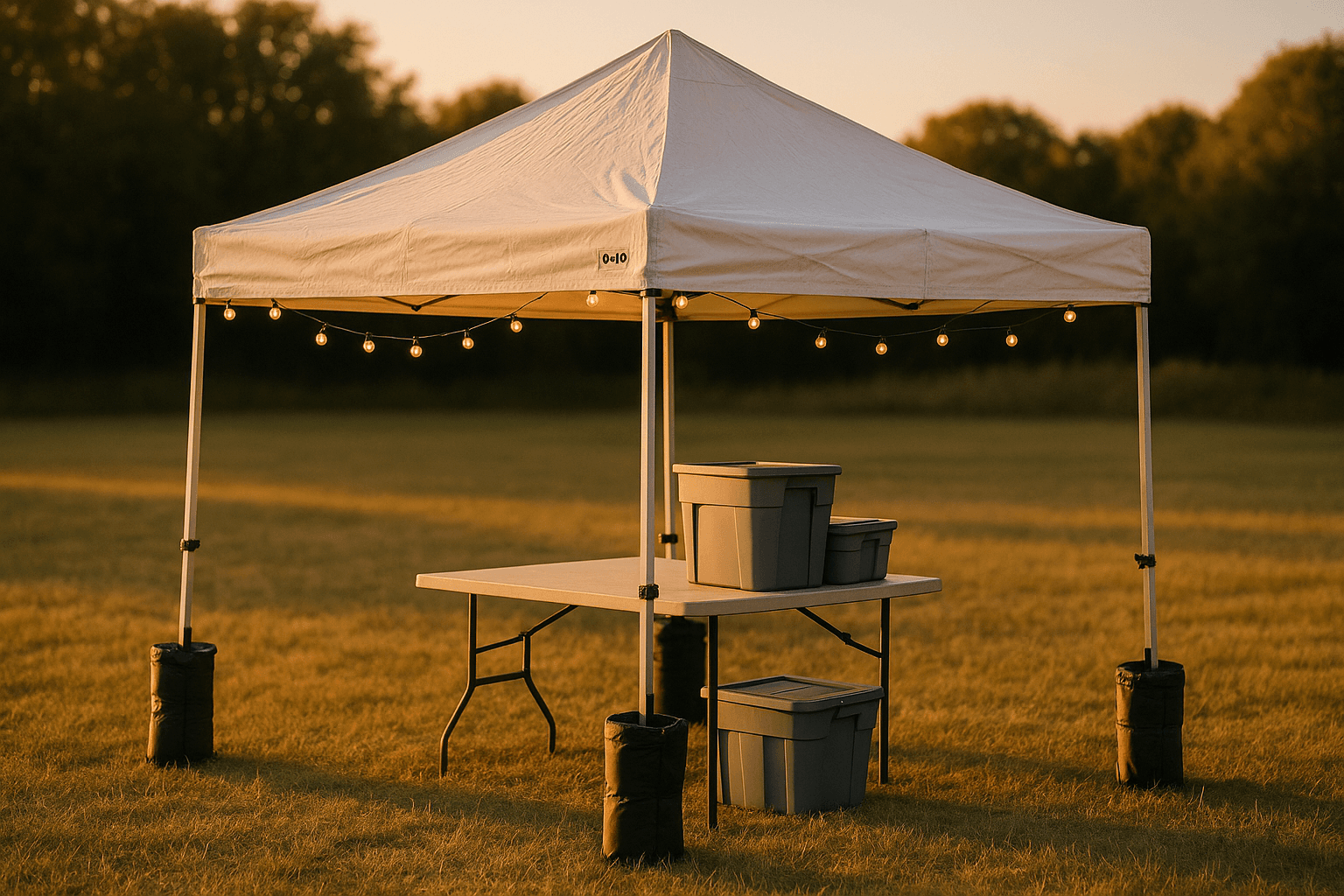
Your tent is the single most expensive piece of gear you will use at every single show. It protects your inventory from sun, rain, and wind. It frames your brand before a customer even steps inside your booth. And if it fails mid-show — a collapsed frame, a pooling roof, a canopy that rips free in a gust — you lose a full day of revenue and potentially hundreds of dollars in damaged product.
Yet most new vendors grab whatever 10x10 pops up first on Amazon, haul it to their first outdoor show, and learn the hard way that a $90 tent was never built for that job.
This guide breaks down exactly what to look for, what to skip, and which tents hold up across three realistic budget tiers — whether you do three shows a year or thirty.
Why Your Tent Matters More Than You Think
A craft show tent does three jobs simultaneously:
- Weather protection. Direct sun fades product and overheats you. Rain ruins paper goods, textiles, and electronics. Wind is the number-one tent killer at outdoor shows.
- Brand presentation. Your tent is your storefront. A sagging, mismatched, or visibly cheap canopy sends the same signal as a hand-scrawled price tag. Customers make snap judgments.
- Repeated abuse tolerance. A tent that does 20 shows a year gets set up and torn down 40 times. Add transport compression, UV exposure, and the occasional sideways rain. Cheap frames bend. Cheap fabric delaminates. The math on "saving $200" stops working after show number four.
If you are investing in inventory, booth displays, and show fees, your tent deserves the same level of planning.
Key Specs to Evaluate Before You Buy
Before comparing brands, know what the numbers actually mean.
Frame Material: Steel vs. Aluminum
| Spec | Steel Frame | Aluminum Frame |
|---|---|---|
| Weight (10x10) | 45–70 lbs | 30–45 lbs |
| Durability | Prone to rust over time | Corrosion-resistant |
| Flex in wind | Rigid, can bend permanently | Flexes and returns to shape |
| Price range | $80–$250 | $200–$1,200 |
| Best for | Indoor shows, occasional outdoor | Regular outdoor circuits |
Steel is heavier and cheaper. Aluminum is lighter, stronger long-term, and worth the upgrade if you do more than five outdoor shows a year.
Denier Rating
Denier measures fabric thread thickness. Higher denier equals heavier, more durable fabric.
- 150D polyester — Entry-level. Thin, tears easily, minimal UV protection. Common on sub-$150 tents.
- 300D polyester — Mid-range standard. Solid UV resistance, holds up in moderate rain.
- 500D–600D polyester — Professional grade. Heavy, blocks UV almost completely, handles sustained rain without pooling if the frame holds pitch.
For outdoor shows, 300D is the minimum you should consider.
Other Specs Worth Checking
- Peak height: Standard is 10 feet 6 inches to 11 feet. Shorter peaks feel cramped and restrict hanging displays.
- Setup time: Good commercial tents open in 60–90 seconds for the frame. Budget tents with multi-piece poles take 10–20 minutes.
- Packed dimensions: Most 10x10 tents pack to about 60–65 inches long. Measure your vehicle cargo area before buying — a tent that does not fit flat in your car becomes a logistics headache every single show.
- Packed weight: Ranges from 35 lbs (lightweight aluminum) to 75 lbs (heavy steel with accessories). Factor in the walk from parking to your booth space.
Budget Tier: $80–$150
Best for: Indoor-only vendors doing 2–5 shows per year.
This tier includes tents from Coleman, Amazon Basics, ABCCANOPY, and various white-label imports. They share common traits: steel frames, 150D fabric, and pin-style connectors that wear out fast.
What you get
- Functional rain cover for light showers
- Acceptable appearance when new
- One-season reliability for occasional use
What you give up
- Frames bend in moderate wind (15+ mph gusts)
- Fabric fades and delaminates after 10–15 setups in direct sun
- Push-button leg adjusters jam or strip within a year
- Heavier packed weight despite feeling flimsier
Recommended if you are in this tier
The ABCCANOPY Commercial 10x10 (around $130) is the strongest option here. It uses a slightly thicker steel frame than most competitors at this price and includes a roller bag, weight bags, and sidewalls. It will not last three seasons of heavy outdoor use, but for indoor shows and the occasional farmers market, it does the job.
Bottom line: If you know you will do fewer than five shows a year and most are indoors, a budget tent is fine. Replace it when the frame starts flexing. Do not try to make it survive a windy outdoor circuit — that is how tents become projectiles.
Mid-Range Tier: $200–$400
Best for: Vendors doing 10–25 shows per year, mix of indoor and outdoor.
This is where most serious vendors land, and for good reason. The jump from $130 to $300 buys you dramatically better frame engineering, thicker fabric, and a tent that lasts three to five seasons of regular use.
Top picks in this tier
| Tent | Frame | Fabric | Packed Weight | Street Price |
|---|---|---|---|---|
| EZ Up Envoy | Steel, reinforced | 300D poly | ~55 lbs | $250–$300 |
| Caravan Classic 10x10 | Aluminum | 300D poly | ~42 lbs | $300–$350 |
| Eurmax Premium 10x10 | Steel/aluminum hybrid | 300D poly | ~48 lbs | $200–$250 |
| Impact Canopy TLKIT | Aluminum | 300D poly | ~40 lbs | $280–$320 |
The Caravan Classic and EZ Up Envoy are the two tents you will see at almost every outdoor craft show in America. There is a reason for that. Both survive years of weekend use, set up fast, and hold their shape in moderate wind.
Caravan Classic edges out on weight (42 lbs vs. 55 lbs) and uses an aluminum frame that will not rust. EZ Up Envoy has a slightly more rigid feel and EZ Up's customer support is generally responsive on warranty claims.
If you can only buy one tent and need it to handle everything from a church basement to a July street fair, the Caravan Classic at around $330 is the best value in the market right now.
Professional Tier: $500–$1,200
Best for: Full-time vendors doing 25+ shows per year, primarily outdoors.
At this level, you are buying engineering. Aircraft-grade aluminum frames. 500D+ fabric with full UV coatings. Reinforced leg joints that survive thousands of open-close cycles. These tents weigh less than budget steel tents while being substantially stronger.
Top picks in this tier
| Tent | Frame | Fabric | Packed Weight | Street Price |
|---|---|---|---|---|
| EZ Up Eclipse | Commercial aluminum | 500D poly | ~46 lbs | $600–$750 |
| Trimline | Heavy aluminum | 600D poly | ~50 lbs | $800–$1,100 |
| Flourish Pop-Up | Anodized aluminum | 500D poly | ~44 lbs | $700–$900 |
| E-Z Up Enterprise | Commercial aluminum | 500D poly | ~52 lbs | $900–$1,200 |
The EZ Up Eclipse is the standard professional tent. You will find more Eclipses on the outdoor show circuit than any other single model. The frame flexes in wind without bending permanently, the 500D top blocks UV almost completely, and the pull-pin height adjusters still work smoothly after hundreds of uses.
Trimline tents are hand-built and often custom-ordered. They are heavier but nearly indestructible. If you do 40+ outdoor shows a year in variable weather, a Trimline is a lifetime purchase.
Tent Weights: The Non-Negotiable Safety Requirement
Every outdoor show requires canopy weights. Most shows mandate a minimum of 25 lbs per leg (100 lbs total). Many require 40 lbs per leg. Some coastal or hilltop venues require 50 lbs per leg.
An unweighted tent in a 20 mph gust becomes airborne. This is not hypothetical — it happens at shows every single weekend during outdoor season. Airborne tents injure people and will get you banned from shows permanently.
Weight options compared
| Type | Weight Per Unit | Cost | Pros | Cons |
|---|---|---|---|---|
| Commercial weight bags (fill with sand) | 25–30 lbs each | $15–$25 each | Packable, cheap | Sand leaks, bags degrade |
| PVC saddle weights (DIY, filled with concrete) | 30–40 lbs each | $10–$15 materials | Cheap, durable | Heavy to transport, bulky |
| Steel plate weights | 20–40 lbs each | $40–$80 each | Compact, permanent | Expensive, can scratch floors |
| Water-fill weights | 20–35 lbs each (filled) | $20–$40 each | Light when empty | Leak risk, freeze in cold weather |
Best overall: Commercial saddle-style weight bags filled with play sand from a hardware store. Four bags at 25 lbs each ($60–$80 total) meet most show requirements and fit in a car trunk.
Side Walls: When You Need Them
Side walls are required at roughly 30–40% of outdoor shows and almost never at indoor shows. Even when optional, they are useful in three situations:
- Sun tracking. A west-facing booth at 3 PM in July needs a side wall to block direct sun from hitting your product.
- Rain at an angle. A canopy top alone does nothing for wind-driven rain. One or two side walls on the windward side keep your booth dry.
- Security. If you leave your booth set up overnight at a multi-day show, zip-up side walls deter casual theft.
Material matters. Solid polyester walls block wind and sun but make your booth feel closed off and reduce foot traffic. Mesh walls block sun while maintaining visibility. Clear vinyl walls protect from rain while keeping your booth visible.
Buy at least two solid side walls with your tent. You will eventually need them, and matching aftermarket walls are hard to find.
Solo Setup: Can One Person Do It?
Yes — with the right tent and technique.
Any pop-up style frame can be set up by one person. The process:
- Unpack and set the frame on the ground, feet spread to roughly final position.
- Drape the canopy over the collapsed frame and attach all Velcro corners.
- Walk to one side and lift the frame to half-extension. Walk to the opposite side and do the same. Repeat until fully open.
- Adjust leg heights one at a time.
- Attach weights immediately — before arranging anything else.
Total time for a practiced solo vendor: 8–15 minutes depending on tent quality and whether you are adding side walls.
Common Tent Mistakes That Cost Vendors Money
Buying based on Amazon star ratings. Budget tent reviews skew positive because reviewers used them once for a backyard party. Vendor use is a completely different stress test.
Skipping weights at an indoor show that has an outdoor loading area. Wind does not check your show schedule. If your tent is up outside for even 20 minutes during load-in, it needs weight.
Not carrying a repair kit. A small roll of Gorilla Tape, two extra Velcro straps, and a spare push-pin can save a show day.
Choosing a 10x15 or 10x20 as a first tent. Oversized tents are harder to set up solo, heavier, more expensive, and most shows allocate 10x10 spaces. Start with a 10x10.
Ignoring the canopy color. White tops reflect heat and make product colors pop under neutral light. Dark tops absorb heat and cast colored shadows. For most vendors, white or off-white is the right call.
The Bottom Line
Match your tent to your actual show schedule:
- Under 5 indoor shows/year: ABCCANOPY Commercial (~$130). Replace annually if needed.
- 10–25 mixed shows/year: Caravan Classic (~$330). The best balance of weight, durability, and value.
- 25+ outdoor shows/year: EZ Up Eclipse (~$700). A professional tool that pays for itself within a season.
Buy the best tent you can afford, weight it properly every single time, and never store it wet. That tent will be the most reliable piece of equipment in your vendor kit.
Tired of juggling orders, shipping labels, and lead capture across five different apps at your booth? Shipyie puts it all in one platform built specifically for convention vendors. Start your 14-day free trial — no credit card required.